Early Signs of Autism in Toddlers: What Georgia Parents Should Actually Watch For
Joint attention, gestures, and the presentations that get missed. A detailed look at what early autism signs look like by age — and how to document what you see.
Key Takeaways
- •Joint attention is the single most useful concept to understand first: your child sees something, gestures toward it, then looks back at your face to check that you saw it too.
- •Joint attention matters more than eye contact. Plenty of autistic children make eye contact, and plenty of non-autistic children are simply shy about it.
- •At around nine months the signals are subtle and easy to over-read. A consistent pattern is meaningful; a single quiet week is not.
- •At twelve months the absence of gestures is often more telling than the absence of words, because gestures show a child has grasped that communication is directed toward another person.
- •At eighteen months, two patterns commonly get missed: a child who uses words mainly to label rather than to connect, and a child who repeats phrases from videos with precise intonation but not functionally. Both can read as strong language skills on a quick screen.
Parents rarely arrive at this question because of a checklist. It is usually something smaller and harder to articulate: your child does not turn around when you come in the room, or they play near other children rather than with them, or the pediatrician keeps saying to give it time and something about that answer does not sit right. This article is about learning to see clearly what you are already noticing, and describing it precisely enough that a professional can act on it.
What follows is about recognition only. If you have already decided to pursue an assessment and want to know who can diagnose autism in Georgia, what to bring, how long the wait is, and what happens afterward, that process is covered separately in our guide to autism evaluations in Georgia.
The One Concept Worth Understanding First: Joint Attention
If you learn a single developmental idea before talking to a doctor, make it this one. Joint attention is the moment a child coordinates attention with another person around a third thing. A toddler sees an airplane, points at it, then looks back at your face to check that you saw it too. That loop — object, gesture, glance back at the person — is joint attention, and it is the foundation nearly all later social and language development is built on.
It matters more than eye contact, which is the sign parents most often fixate on. Plenty of autistic children make eye contact, and plenty of non-autistic children are simply shy about it. What is much more informative is whether your child brings you into their experience: showing you things for no reason other than to share them, checking your face when something surprising happens, following your gaze or your point across a room. Reduced joint attention is one of the earliest and most reliable early indicators, and it is something you can observe at home this week without any special tools.
By Around 9 Months
At this stage the signals are subtle and easy to over-read, so hold them loosely. What tends to be meaningful is a consistent pattern rather than an isolated observation: little back-and-forth exchange of smiles or facial expressions, limited response to their name or to familiar voices, few reciprocal sounds, and reduced interest in the social game of peek-a-boo or similar routines. Babies vary enormously at nine months. A single quiet week is not a pattern.
By Around 12 Months
Twelve months is where the gestures should be arriving. By this point most children are pointing, waving, reaching up to be picked up, and babbling with the rhythm of speech even if no words are recognizable. The absence of gestures is often more telling than the absence of words, because gestures show that a child has grasped that communication is something you do toward another person.
Also watch response to name. A child who reliably turns when a favorite show starts but does not turn when their name is called across the room is worth noting, precisely because it indicates the hearing is likely fine and the difference is in social response.
By Around 18 Months
This is the age when many families first raise concerns, and it is also when standard screening happens. Look for single words used to mean something rather than repeated as sounds, pretend play beginning to appear such as feeding a doll or pushing a toy car with intent, imitation of what you do with objects, and pointing to ask for things as well as to share interest.
Two patterns commonly show up here. One is a child who has words but uses them mainly to label rather than to connect — naming every letter or vehicle without using language to request, protest, or comment. The other is a child who repeats phrases from videos with precise intonation but does not use those phrases in a functional way. Both are worth mentioning specifically to a pediatrician, because both can read as strong language skills on a quick screen.
By Around 24 Months
By two, most children are combining two words, following simple instructions in context, and showing interest in other children even if they do not yet play cooperatively. Signs that warrant attention include no two-word phrases, marked difficulty with any change in routine, strong and specific sensory reactions to sound, texture, clothing, or light, and play that centers on arranging and ordering objects rather than using them symbolically.
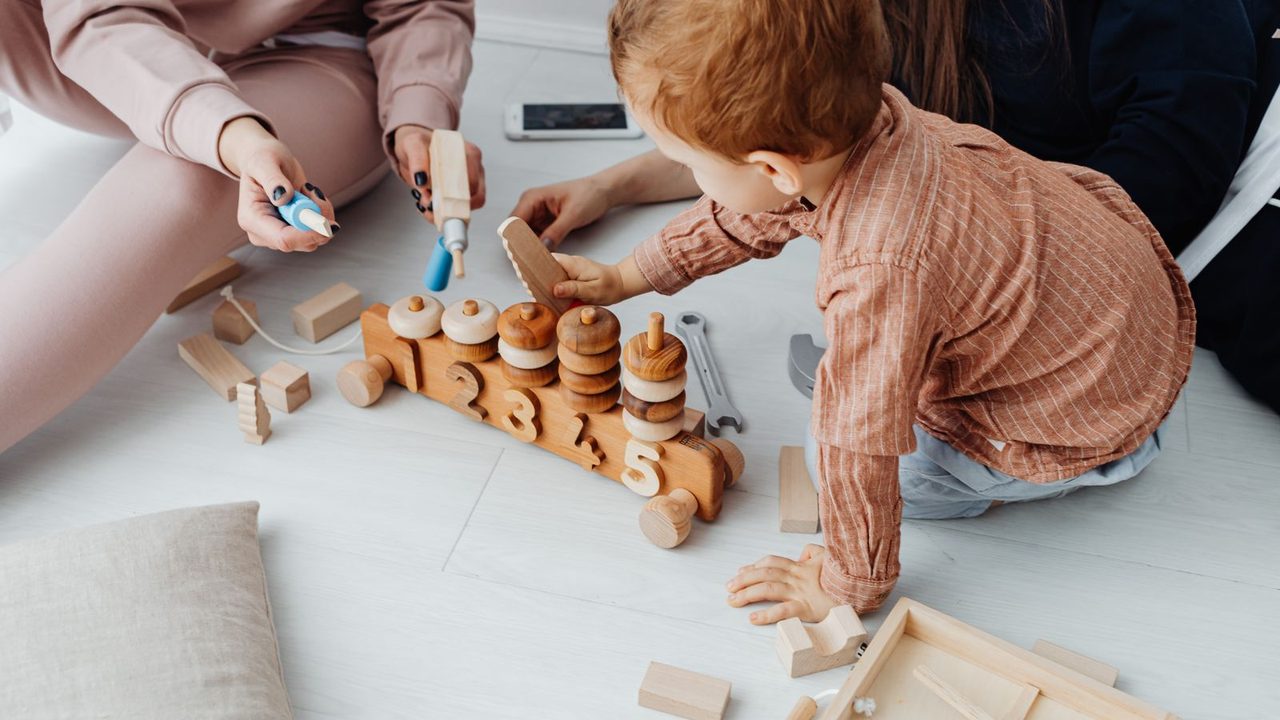
Be careful with the ordering-toys observation. Lining things up is common in typical development too. What is more distinctive is when arranging is the primary way a child engages with toys over a long period, and when interruption of the arrangement causes distress well beyond ordinary frustration.
By Three and Beyond
Older children often come to attention for different reasons. Language may be fluent while conversation remains hard — difficulty with the back-and-forth, staying on a topic of shared interest, or reading tone and facial expression. Play with peers may break down around flexibility and negotiation rather than around interest. Transitions, unstructured time, and noisy environments tend to be where difficulty shows up most, which is why concerns sometimes surface for the first time when a child starts preschool or kindergarten and the social demands increase sharply.
The Presentations That Get Missed
A significant number of autistic children are identified years later than they could have been, and the reasons follow recognizable patterns.
Girls are diagnosed later and less often. Diagnostic criteria and screening instruments were developed largely from studies of boys. Autistic girls more frequently mirror the social behavior of peers, maintain a small number of close friendships that mask broader difficulty, and have intense interests in subjects that do not look unusual from the outside — animals, books, a particular fictional world — so the interest itself never raises a question.
Children who talk early and well. An advanced vocabulary reassures adults quickly. But a four-year-old who delivers detailed monologues and cannot manage a two-way exchange has a social communication difference that a vocabulary check will not detect.
Children who are quiet and cooperative. Referrals are often driven by disruption. A child who withdraws rather than acts out, who follows routines carefully and never causes trouble, may go years without anyone raising a concern.
Children who lose skills. Regression — losing words, gestures, or social behaviors that were previously established — happens in a subset of autistic children, most often between fifteen and twenty-four months. Loss of previously acquired skills at any age warrants prompt attention rather than a wait-and-see approach.
Stimming: What It Is and When It Actually Matters
Repetitive movement — hand flapping, rocking, spinning, finger movements near the eyes — is one of the more visible signs, and also one of the most misunderstood. Self-stimulatory behavior generally serves a purpose: regulating an overwhelming environment, expressing excitement, or managing anxiety. It is worth reporting to a clinician as an observation, because it is diagnostically relevant.
It is not automatically something to eliminate. The autistic adult community has been consistent and clear on this point, and it is worth hearing before your first appointment. Stimming becomes a genuine concern when it causes physical harm or when it fully prevents participation in something the child themselves wants to do. Stimming that is merely visible to other people is not a problem to be solved. Keeping that distinction straight from the beginning will help you evaluate the therapies you are later offered.
Things That Can Look Like Autism and Are Not
Part of why a proper evaluation matters is that several other explanations produce overlapping presentations, and some are straightforward to address.
Hearing loss is the most important to rule out early, because intermittent or partial hearing loss can produce delayed speech and inconsistent response to name — a pattern that looks strikingly similar. Chronic middle ear fluid in the toddler years is common and easily missed. A developmental language disorder can delay speech without affecting social reciprocity. Global developmental delay affects multiple domains at a similar rate rather than showing the uneven profile more typical of autism. Significant early stress or disrupted caregiving can also affect social engagement. A comprehensive evaluation is designed to distinguish between these; a checklist is not.
How to Document What You Are Seeing
The difference between a productive appointment and a dismissive one often comes down to how specific you can be. Vague concern invites reassurance. Concrete observation invites investigation.
Keep a short written log over two or three weeks. Note the date, what happened, and the context, in one or two sentences: not "poor eye contact," but "called his name four times from three feet away while he was playing, no response; he turned immediately when the tablet started." Record short videos on your phone of the specific things that concern you — behavior in an office visit is frequently unrepresentative, and video is often the most persuasive thing you bring. Write down when each milestone appeared, and be explicit about anything that appeared and then disappeared.
American Academy of Pediatrics guidance calls for developmental screening at nine, eighteen, and thirty months, with autism-specific screening at eighteen and twenty-four months, commonly using the M-CHAT-R. If your child is at or past those ages and has not been screened, you can ask for it directly by name.
If you are met with wait and see, that is worth pushing back on politely and specifically. A useful phrasing: "I understand it may resolve, and I would like the referral anyway so that we are not waiting twice." In Georgia, waitlists for diagnostic evaluations frequently run several months, which means a six-month period of watchful waiting often costs closer to a year of access. You can also refer your own child directly to Georgia's Babies Can't Wait early intervention program if they are under three, without a physician referral and without a diagnosis — developmental concern is sufficient to start.
What to Do With This
Noticing is not diagnosing, and nothing here is a substitute for an assessment. What careful observation does is make the next conversation far more productive. If several of these patterns describe your child, write down what you have seen, request a screening by name, and ask for the referral even if you are told it may not be necessary.
For what happens after that — who conducts evaluations in Georgia, what to bring, and how to prepare — read our guide to the evaluation process. To find early intervention providers, diagnostic evaluators, or speech therapy near you, browse the Stiimi directory.
Frequently Asked Questions
What is joint attention and why does it matter so much?
Is a lack of eye contact the main sign to watch for?
My child turns when a favorite show starts but not when I call their name. Does that mean anything?
Can a child with a large vocabulary still be missed on a screening?
Medical Disclaimer: The information in this article is for general informational purposes only and does not constitute medical advice. Always consult a qualified healthcare professional before making decisions about your child's care.

Stiimi Staff
This article was thoughtfully created by Stiimi staff for use on Stiimi.com.
Stay Connected
Get updates on new resources, provider listings, and helpful articles delivered to your inbox.